
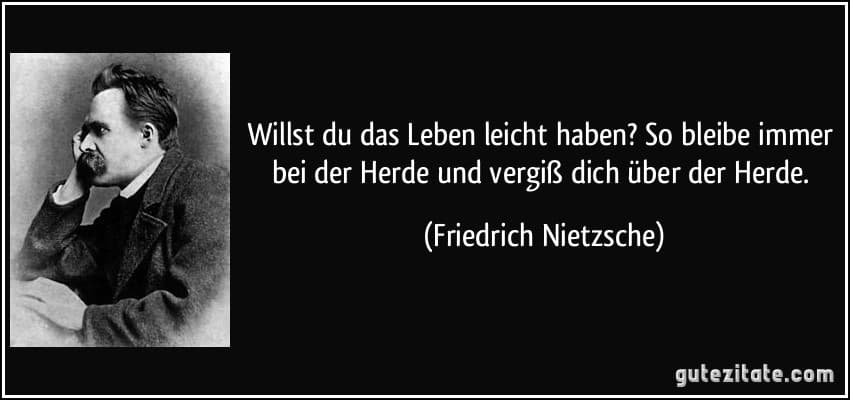
Do you want an easy life? Then always stay with the herd and forget yourself among the herd.
— Friedrich Nietzsche
I just caused an incident while managing my homepage. After modifying some code, committing, and pushing, a bug where I had incorrectly changed a status name caused posts I had only drafted and kept hidden to go public. It was a simple typo. A staging server would have caught the problem early, but spending that much on a personal site is, honestly, a bit of a stretch.
This is exactly what it means to live apart from the herd. It means enduring pain that others never have to face. If I had just used one of Korea's large community sites or social media platforms, this kind of problem would never have occurred because of a typo in code I wrote myself.
Running your own site is, first of all, quite an expensive hobby. From Vercel to AWS Lightsail, each piece costs money. (Starting everything from scratch on a single VPS felt too daunting, so I bought some convenience with a certain level of spending.) In Korean won, it runs about 90,000 won a month, making it a fairly upscale hobby.
So what do I get out of it? A space where I can rest my mind.
Honestly, building a homepage on Medium or Substack would be far more practical than running my own blog. Monetizing posts is easier there, and it's simpler to compile writings into a book tied to an actual platform. But why did I go through all this pain to build my own homepage?
My site makes no money. I have no intention of running ads either.
Choosing to put display ads on a developer-focused site is a foolish idea to begin with. Developers are, broadly speaking, a demographic that doesn't pay off on the internet. They'll block free ads with an ad blocker, and I'll end up spending time figuring out where to carve out ad space.
My blog content isn't the kind of thing the general public would go out of their way to read, which makes it even worse. As for visitors, roughly 80% are crawling bots and 20% are humans. On top of that, it takes an enormous amount of time. From SEO optimization to all sorts of minor chores, there's a great deal to do just to keep the site running, and it demands a significant outlay of money as well.
A freelance programmer ends up doing all kinds of miscellaneous work, from web crawling to ad-spamming programs. In the process, you sometimes learn things about communities and advertising, and you come to realize that so-called ad agencies manipulate opinions on community platforms or manufacture preconceptions through mass reporting.
Every community site and homepage ultimately exists to sustain a business, meaning it's fundamentally designed to connect users within the site in order to make money.
You end up seeing feeds you never wanted to see, misinformation, and what are commonly called sockpuppets manipulating opinions about specific products or public sentiment.
In the process, you do learn facts you never knew before, but you also come face to face with the pervasive preconceptions embedded in those platforms.
As I browse sites from Korea, the United States, China, and Japan and observe the preconceptions unique to each one, I find myself stepping back and thinking.
Whichever site you look at, the way that site makes money shapes its preconceptions, and only the opinions suited to the tastes of its particular user base ever surface.
For instance, watching opinion manipulation that favors Korea's large conglomerates, or seeing promotional channels plastered everywhere to boost specific YouTube channels, it becomes easy to get swept up in a particular prevailing sentiment.
The problem is that when people receive such information without any prior preconceptions, most of them end up with the bias and preconceptions of that first exposure locked in. And once that initial spark takes hold, users within the community reinforce the narratives around it to lend it legitimacy.
Every community site has its 'hatred.' Perhaps humans need hatred as such. That hatred creates cohesion and a sense of belonging among community members by casting outsiders as the enemy, but it also makes people narrow-minded.
'Hatred' is an adhesive. Once you designate something to despise, it becomes easy to define who 'we' are. Conversely, being bound together that way carries the risk that the range of things I'm willing to explore may shrink even further.
There is no reason to hate people you have never encountered, or to think poorly of products you have never tried. Because human cognitive capacity is limited, people explore the things they care about while quickly forming biases about things outside their interest. When the bias of hatred takes up residence in your head first, it becomes hard to see others through anything other than that bias.
Of course, I know that I, too, am not free from bias, being human.
I also accept certain narratives without question. But as an individual, I have the time and space to question them, the capacity to doubt myself. Yet if you are always connected to others, the opportunity to reconsider disappears.
Most people want to connect with someone. Browsing internet community feeds and threads and having conversations is an expression of that impulse. People join communities like Reddit or DC Inside precisely because they need others, and they want to place themselves within a group by talking with people.
That desire itself is not wrong.
Humans are social animals, and I too want to talk with someone and hope that someone will read what I write. If that weren't the case, there would be no reason to put a homepage on the internet in the first place. If writing alone were the goal, a single notepad would have been more than enough.
The problem is that in the process of finding a sense of belonging, we adjust our thinking.
Spend enough time in any community and you naturally come to know what is liked and what is disliked there. You also learn which topics earn you a warm welcome and which ones invite criticism.
Before long, even without anyone forcing you, you start watching your own words.
You self-censor.
Not that I claim my public homepage is free from censorship. If there were none, my homepage would be plastered with explicit images.
So why, then, do I run a homepage?
Because I don't want to connect with the 'herd.' I want to connect with someone who carries a solitude similar to mine.
Community feeds, threads, and posts are a noisy public square. Anyone can easily raise their voice there, and people quickly form packs to consume hatred directed at someone. My homepage, by contrast, is a study at the end of a narrow footpath where it's hard for even a single person to pass through.
I keep the door of this study deliberately open toward the outside world called the internet. I hope that what I write will appear on the screen of a stranger who stumbles in through a search, rather than a crawling bot. But it isn't for the sake of applause from the square. I simply want that strange and warm 'resonance (共鳴)' felt when the one person who visits my study finds genuine sympathy in my tucked-away thoughts. It is not a longing for belonging, but a longing to find another independent soul.
This is why the desire for communication is so tormenting.
I want to be alone, yet I am lonely; I want to connect with someone, yet I don't want to lose myself within that connection.
But thinking it over carefully, even the idea of searching for someone with a solitude like mine is contradictory. In the end, isn't it possible that I want to find people similar to myself, resonate with them, and form yet another herd?
I have always thought of myself as a creature of contradictions. The things I criticize always share the same qualities as me. So perhaps I am someone who criticizes while looking in a mirror.
It is my fate to live with these contradictions, and I spend money for the sake of them.
My wallet is poor, but I squander money for the bourgeois within my mind.