
Escaping Heroism in the Tech Industry
Recognizing someone's excellence and entrusting your judgment to them are two different things.
The tech industry loves people. More precisely, it loves the practice of borrowing a person's reputation rather than talking about the technology itself. Compressing a complex product and a long development process into a single founder, a single engineer, a single vision makes it easier to explain things.
It is easier to say who set the direction, and easier to reduce the reasons for success to a single sentence.
So at some point, the founder's name gets mentioned more than the company's name. The founder's interviews draw more attention than the team that built the product, and a single decisive moment becomes legend while years of accumulated technology fade into the background. What happened inside the company gets explained through one person's intuition and courage, and where the company went wrong gets explained through that person's personality or eccentricities.
None of this is entirely false, and there really are exceptional people, and a single person's judgment can sometimes change the direction of an organization. The problem is that the moment people accept that fact, they begin handing their judgment over to that person.
Someone who built a successful product once comes to be seen as someone who understands the future, and someone who has solved technical problems comes to be seen as someone who holds the answers to social problems as well. Much like how people believe that a student who scored well on Korea's college entrance exam will naturally go on to produce great results in the tech industry, there is a tendency to link a small success to sweeping, macro-level success across the board.
Achievement always converts into authority, and that authority gets used like a license covering nearly every domain.
The convenience of a person's name
It is comforting to explain a complex outcome through the ability of a single person. Tracing the reasons a product was built through organizational structure, research staff, supply chains, customer feedback, government policy, prior-generation technology, and competitors' failures takes a long time and resists easy summary. Rather than accounting for the complex political climate and market conditions of the moment, saying "the founder set the right direction" makes it easy to close the story.
The problem is that when the story ends, accountability and causality disappear along with it. It no longer shows who actually built things, what conditions existed, what failed, or whether the achievement is repeatable. The result becomes one person's inspiration, and everything else becomes backdrop.
This approach does not stop at praising individuals; it also seeps into how organizations are run. Once experience accumulates confirming that the founder's judgment was correct, reviews and deliberation begin to look like slow procedure, dissent gets interpreted not as caution but as obstruction, and the leader's conviction gets placed above the data that explains failure.
From that point on, the hero is no longer the person who produces results but the person inside the organization who receives the fewest questions.
DUNE
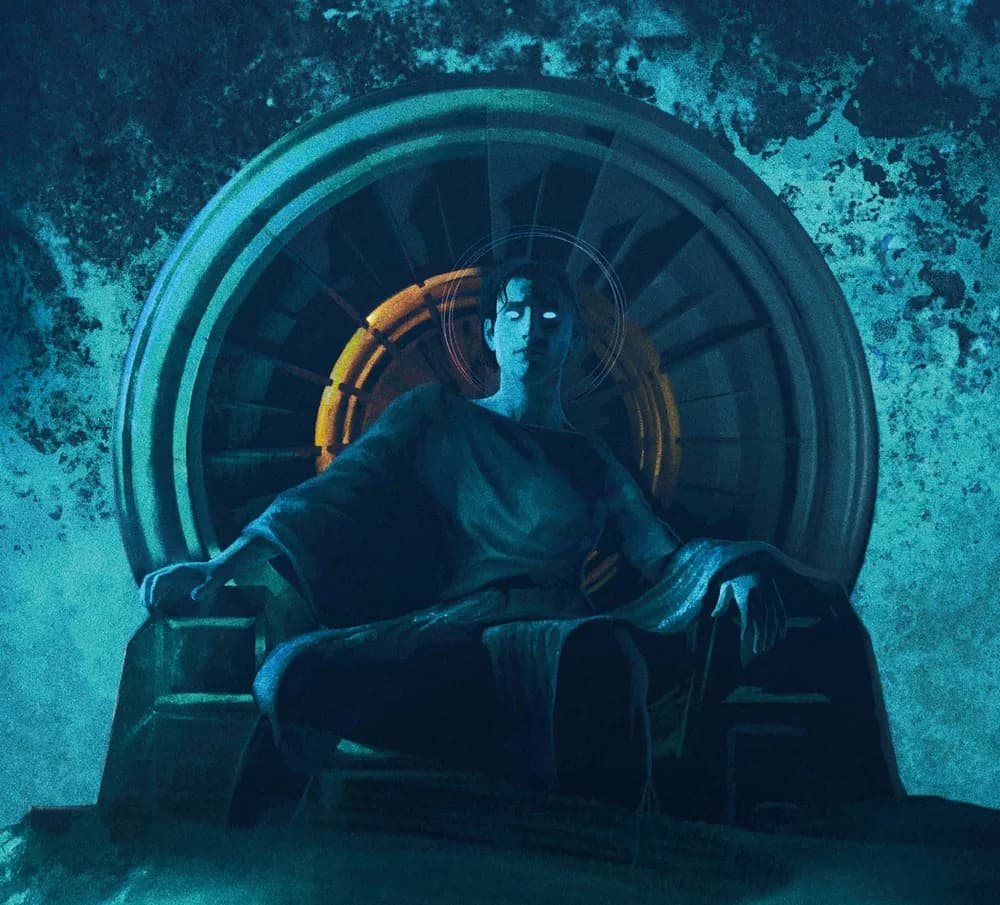
There is a novel called Dune. It is a science fiction novel written by Frank Herbert, and since its publication in 1965 it has remained one of the most celebrated works in the SF genre to this day.
If the first part of this novel were reduced to a single sentence, it would be this: a boy from a noble family stripped of its throne becomes the savior of a desert people and exacts revenge on the empire. Written out like that, it sounds like a typical hero's journey, but the actual content is quite different.
The protagonist Paul Atreides' family is ordered by the Emperor to take charge of Arrakis, a desert planet. Arrakis is a near-waterless wasteland, yet it is the sole source of spice, the most vital resource in the universe. Without spice, neither interstellar travel nor the empire's economy can function properly. Controlling Arrakis, therefore, is less like possessing a single desert planet and more like gripping the arteries of the empire.
Naturally, everyone wants it.
The Emperor, noble houses, the faction that manages the spice, the Bene Gesserit who have manipulated human bloodlines and religion for thousands of years, and the Fremen who live on that desert are all entangled with one another. Paul's family collapses inside this political trap, and Paul flees into the desert with his mother.
And there, something strange happens.
Among the Fremen there is an ancient prophecy that one day a savior will arrive from outside. Paul fits that prophecy with startling precision. He learns the Fremen language, survives the desert, fights their enemies alongside them, and even begins to perceive possibilities in the future that ordinary people cannot see.
He is not simply a con man claiming to be the Messiah.
He is genuinely, truly special.
Stories that criticize hero-worship usually work by unmasking the hero, exposing that the person once thought to be great was in fact greedy, incompetent, or dishonest. Frank Herbert's Dune does not do that. The lesson in the typical critique-of-the-hero-narrative cliché is simple:
That person was a fraud, so don't trust them.
But Dune steers the reader toward a far more uncomfortable question.
What if that person is real?
If someone appears who is genuinely smarter than others, genuinely capable of seeing further ahead, genuinely able to bring down a corrupt existing order, and genuinely able to deliver victory to those who have been oppressed, how much of our judgment may we hand over to that person?
If Paul had been incompetent, Dune's warning would have been easy.
It would be enough to say that the Fremen, the desert people, were foolish and were deceived by a false Messiah. But there are entirely understandable reasons why the Fremen follow Paul. They had been exploited for a long time, the empire was corrupt, and Paul actually learns their language, fights alongside them, and delivers victories.
So even the reader naturally begins to think:
Someone that capable, surely it's all right to follow?
That is precisely the moment Dune begins.
What Frank Herbert feared was not an incompetent leader. It was the phenomenon of people surrendering their own critical judgment to a leader who is capable, charismatic, and genuinely worthy of respect.
That is why a criticism occasionally directed at Dune goes something like this:
If you wanted to critique the worship of a superman, why did you make Paul look so compelling?
Paul has to be compelling for the warning to hold.
This question reveals, in reverse, exactly what Dune's warning is aimed at. Paul appearing compelling is not a flaw in the critique of superman-worship; it is its premise. Warning people "don't entrust your judgment to this person" about someone who has no ability and whom nobody wants to follow is obvious and unremarkable. But whether we can preserve our own judgment in the presence of someone who is genuinely superior to others and who reveals things the existing order cannot see, that question only holds when the attraction is real.
Paul's appeal is therefore not decoration that undermines the message. That appeal itself is the device that tests the reader.
Beyond that, what makes Dune even more unsettling is the fact that problems can arise even if Paul does not become corrupt.
What converges on Paul is not mere power. The Fremen's longing for liberation, the desire for revenge against the empire, the religious prophecy the Bene Gesserit planted long ago, the legitimacy of the Atreides bloodline, and Paul's own ability to actually perceive the future all concentrate in one person simultaneously. Countless people who had been moving for different reasons now begin to understand their own purposes through a single name.
From that moment, Paul is no longer simply a leader issuing commands. He becomes the very framework through which people interpret the world.
An ordinary holder of power can be opposed when they issue a wrong order, but once a person begins to be accepted as the liberator of a people, the fulfillment of a prophecy, and a being who can see the future, the act of disagreeing with that person's judgment can itself be recast as opposition to the community's purpose. Trust in an individual transforms into political legitimacy, and political legitimacy is reinforced further by religious conviction.
The power created that way is not something that can be stopped by Paul's individual will alone.
Paradoxically, the more genuinely exceptional Paul actually is, the stronger this process becomes. His victories become evidence for the prophecy, belief in the prophecy moves more people, and the more people move, the more Paul is able to produce the next victory. Success validates the myth, and the myth in turn makes the next success possible: a self-reinforcing cycle begins.
What is dangerous in Dune, therefore, is not "the moment a good person later becomes a bad person" but rather what happens when individuals captivated by one person begin to coalesce into a crowd.
It is the moment a single human being's ability and success transform into grounds for delegating ever more decision-making power to that person.
Whether Paul is good or evil is a secondary question. No matter how good a person is, they cannot fully own the faith, interests, and desire for revenge of millions gathered under their name. No leader can control all the meanings that a group assembled under their name assigns to that name. A leader can start a movement, but once the movement has grown large enough, there is no guarantee they remain its master.
The superman Herbert feared is therefore somewhat different from a tyrant. A tyrant forces our submission. The more dangerous superman, however, makes us want to hand our judgment over to them of our own accord.
At this point Dune stands at an intersection with Silicon Valley-style tech industry heroism.
The people celebrated in the tech industry are also, for the most part, not frauds who have done nothing. On the contrary, they actually built good products, were right when others said they were wrong, and made decisive calls that produced results when organizations stalled. So it is somewhat rational that people assign higher value to their next judgment as well, but the problem lies in how that rational trust transforms, at some point, into exemption from verification.
"This person has been right about this problem many times" becomes "this person is probably right about other problems too," and then shifts further to "so there's no real need to question this person's judgment." Achievement generates trust, trust generates authority, and when authority generates further achievement, that person's standing grows even larger.
The structure is similar to how Paul's victories validated the prophecy and the prophecy made the next victory possible.
Separating ability from authority
The process by which heroism is constructed in the tech industry actually starts from a surprisingly rational place. If someone has made the right call in difficult situations multiple times, extending high trust to their next judgment is not a problem in itself, but the problem is that this trust does not stay confined to problems in the same context.
The person who made a product successful gains authority over the organization; the person who grew the organization gains authority over the industry; and the person who succeeded in the industry gains authority to speak about the future of society.
A sentence that started as "this person knows this problem well" shifts at some point to "this person sees the future better than others."
Achievement moves from being evidence of expertise to becoming the authority of the person themselves.
Ability is an observable track record of results; authority and power are things a crowd confers. The two are separate. Whether a person is good at something and what decisions that person should be allowed to make are different questions.
Someone who excels at product design is not guaranteed to design organizational culture well. Someone who grew a company is not guaranteed to make sound final judgments on regulation, labor, and social policy. Someone who is an excellent developer has no particular reason to set the working methods of all other developers.
Outstanding product judgment is evidence of outstanding product judgment. It does not automatically become evidence of judgment in labor policy, politics, education, social institutions, or other technical fields. Each time authority extends into a new domain, new justification is required.
The problem is not acknowledging that a hero exists. It is transferring authority acquired in one domain to another domain without collateral.
The biggest problem with heroism is that it expands the valid scope of authority beyond the domain in which it was earned.
When is a hero made?
In my view, the moment a hero is made is not when people begin to praise someone.
It is when people begin to feel that verifying that person's judgment is no longer necessary.
At first, their opinion competes with other opinions. It gets compared against data, subjected to dissenting views, and revised when it fails. But as successes accumulate, the process of judgment itself changes.
The question "why do you think that?" gradually disappears, replaced by "if it's them, there must be some reason," and the organization falls into compliance with what that person says.
This is where ability converts into power.
Power is not gained because the person never gets things wrong. Power is gained, and because of it, the person becomes someone for whom being wrong is difficult to prove.
Why doesn't a hero's failure kill the hero?
Beyond that, the strange thing is that heroism does not necessarily end when the hero fails.
When they succeed, people say their insight has been proven. When they fail, people say the organization did not move fast enough, or that the employees failed to understand the vision, or that the market was not yet ready.
Success and failure stop being opposing pieces of evidence and start being material that explains the same person's greatness.
When they succeed: "Of course, they were right."
When they fail: "The world just hasn't caught up to them yet."
Once things reach this point, the hero narrative becomes a framework that is difficult to falsify.
Why do we abandon our own thinking?
There really are people who surpass others. Some see products far more clearly, some read the direction of technology years ahead, and some can make decisions when an organization of thousands cannot move.
Pretending those differences do not exist fails to explain reality.
Steve Jobs, Elon Musk, and others
Steve Jobs was one such person, and if you were to pick the most extreme living example today, there is Elon Musk.
To some people, Elon Musk looks like "a singular individual capable of reading the future across multiple civilizations, dismantling existing empires, and carrying humanity to its next stage." Electric vehicles, space, AI, brain-computer interfaces, tunnels, and social platforms in entirely different domains are all bundled under one person's name. Tesla's official biography describes him as co-founding or leading Tesla, SpaceX, Neuralink, and The Boring Company.
Whether "Musk is real or a fraud" is not the important question. In fact, because he has real achievements, the projection onto him is stronger. People do not sustain a Kwisatz Haderach image onto someone who is a fraud with nothing to show. The problem arises when people begin handing over more and more decision-making authority to someone who has produced genuinely extraordinary results.
This fits Dune well. Paul too was dangerous precisely because he was not a simple false prophet but someone with real ability who was genuinely special. Herbert also wrote that "superheroes are a catastrophe," arguing that a superhuman's mistakes drag too many people into disaster. To his fans, Musk appears in just that way.
Electric vehicle transition → Savior of climate and industry
SpaceX → The one who will make humanity a multi-planetary species
Neuralink → The one who will break through the limits of human intelligence
xAI/Grok → The one who will set the direction for the AI era
X/Twitter → The one who will reshape the order of media and public discourse
That is to say, one person is imagined as the answer to far too many future problems.
But here is an even more interesting point: his devoted followers' view of his failures does not shatter the image of Musk as a successful innovator. His successful ventures are added to his overall track record as evidence that he is "someone who saw the future before others." But has he only succeeded?
Electric vehicle transition → Built Tesla into a global EV company

Autonomous driving predictions → Missed the 2017 LA–NY fully autonomous demonstration promise; 2020 target of 1 million robotaxis also fell short

SpaceX → Achieved major successes with reusable rockets and the commercial space industry

Mars timeline → Repeatedly proposed aggressive schedules, delayed multiple times

Cybertruck → Strong symbolism as an electric pickup with actual product release

Cybertruck promises → Proposed $39,900 starting price and 500+ mile max range in 2019; actual 2023 release started at $60,990, and initial specs fell significantly short of the promised max range

Tesla Roadster → Announced in 2017 as a symbol of next-gen high-performance EVs

Roadster timeline → Originally scheduled for 2020, but as of August 2026, still not released

Boring Company → Actually built tunnels and operates the Las Vegas Loop

Initial vision → Compared to the early vision of a high-speed, large-scale urban transit network, the actual implementation is far more limited
Successes are attributed to the person; failures are attributed to circumstances.
As this repeats, a strange asymmetry takes hold. Success in electric vehicles or the space industry gets extended as grounds for believing he will make better judgments about AI, politics, and the future of media too, while his failures are written off as merely bad luck or the interference of rivals.
Of course, the mere fact that someone has failed does not invalidate their other achievements, but treating failure that way is equally flawed reasoning. What matters is evaluating success and failure on the same terms. Some successes demonstrate ability in a given domain, and some failures demonstrate that a judgment was wrong. Neither needs to serve as a final verdict on an entire human being.
Heroism begins exactly here. Instead of evaluating achievements, people start evaluating the person, and once someone acquires the status of "an exceptional person," subsequent individual judgments fall under the halo of that status.
In that sense, "Musk worship" and "Musk hatred" may in fact be mirror images of each other. Devotees see him as humanity's savior; detractors see him as the root cause of every problem. Yet both
assign excessive historical significance to one human being and make him a hero, a singular figure in history. This clouds our reason. Someone who does not surrender their thinking acknowledges achievements as achievements while insisting that those achievements do not justify every judgment he makes.
He may be a figure who opens doors to the future, but we must clearly recognize that he is not someone who has been entrusted with your future or mine.
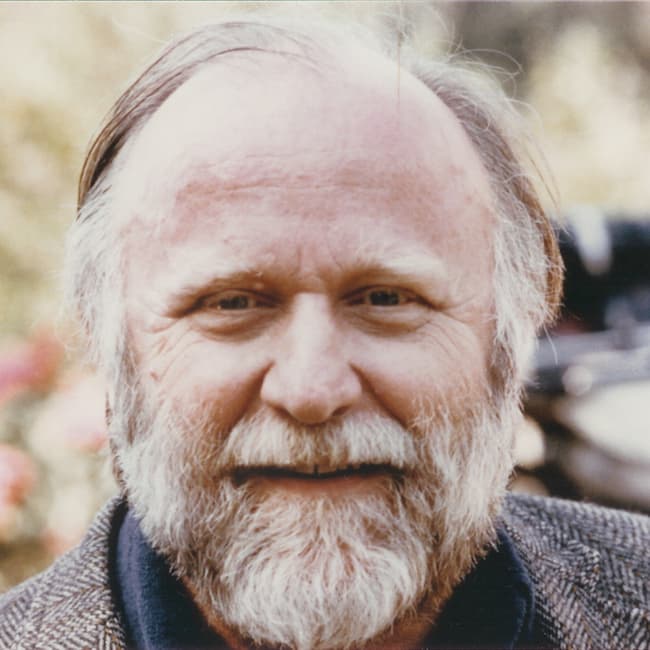
(Frank Herbert)
Herbert said the following in his essay "Dune Genesis" (Omni, 1980) and in various other statements:
"Don't give over all of your critical faculties to people in power, no
matter how admirable those people may appear to be."
Excellence can justify power, but it does not justify unlimited power.
Society can give an exceptional person more of a voice and can entrust them with larger decisions. But there is no reason to remove the process by which that person is held accountable and verified.
Some may say that process is unnecessary and ruins innovation. But setting aside the question of whether that innovation actually benefits the community:
Process must exist to ensure that a single person's conviction can be explained on its own merits, without the weight of that person's name, before it is converted into a community decision.
Eliminating that process because it feels inconvenient can make an organization faster.
But from that moment on, in exchange for a faster organization, we also take on the risk of creating an organization in which it is difficult to discover when one person's judgment is wrong.
Between the fact that someone has been right more often than others and the conclusion that they no longer need to be questioned, there is no logical necessity whatsoever.
I believe that gap was ultimately what Herbert was warning about.
Paul was not dangerous because he was a fraud. He was real, and the danger lay in the fact that because he was superior to others and actually delivered victories, people wanted to hand their judgment over to him.
The same is true in the tech industry.
The error of heroism does not lie in believing that exceptional people exist. It lies in converting excellence into a blank check for decision-making authority.